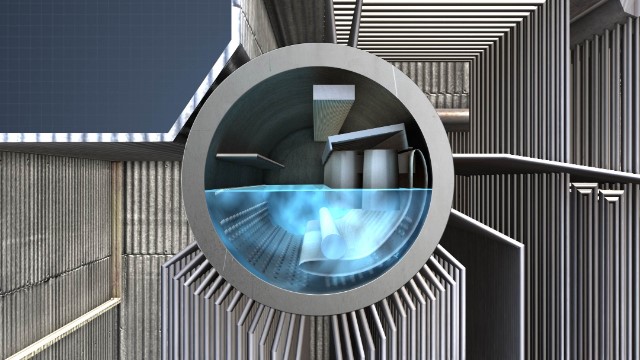
The purpose of a power boiler is to create steam by applying heat energy to water. The water supplied to the boiler, which is converted to steam, is called feedwater. This feedwater system removes any impurities in the condensate, which is steam converted back to water, preheats and pressurizes it then returns it to the power boiler steam drum. The power boiler control system maintains the proper flow of feedwater to the boiler. As the hot combustion gases pass from the furnace through the generating tube bank, steam is formed in the tubes and rises to the steam drum. This module describes the major components and flows associated with feedwater and steam in a power boiler.
•Define "feedwater" and "latent heat"
•Identify and describe the safety hazards and guidelines associated with power boiler feedwater and steam
•Identify the two typical sources of feedwater in a power boiler
•Identify and describe the major components of a feedwater system
•Explain the flows of condensate and makeup water to the boiler
•Describe the effects of improper feedwater levels in the steam drum
•Identify and describe the major components of a steam system
•Describe the flow of water and steam within a power boiler






.png)